
Businesses must always make choices. They do this amid uncertainty. This includes launching new products or entering new markets. Risk is part of every strategic decision. Before investing resources, it’s key to assess the chances of success. Data modeling is important. Probability analysis is also key. This is true for chance-based businesses, like the Aviator Game. Success in business settings is rarely determined solely by intuition.
Determining the Definition of Success
Businesses should establish what success truly means before calculating likelihood. It could mean hitting a revenue goal. It might involve growing market share. It could also mean cutting costs or getting a set number of new customers in a certain time. Probability becomes imprecise and ambiguous in the absence of quantifiable standards.
Leaders may compare projections with realistic benchmarks when definitions are clear. Uncertainty changes. It goes from being an emotional feeling to something we can measure.
Finding Patterns in Historical Data
One of the most useful methods for calculating probability is past performance. Businesses look at past investments, product launches, and projects. They want to see what worked and what didn’t. Strong analysis, however, is more than just success rates.
Executives look into the circumstances that led to previous results. In past efforts, they studied price tactics. They also looked at consumer demand and market trends. They checked competitor actions and how well operations ran. They should not assume the future will be like the past. They can improve probability estimates by finding patterns.
Historical data helps with forecasting, but it doesn’t guarantee future results.
Forecasting and Modeling Scenarios
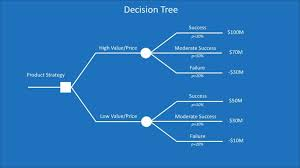
Instead of forecasting just one result, businesses create several scenarios. Usually, they simulate cautious, moderate, and optimistic forecasts. Each scenario has different assumptions. They cover market conditions, cost structure, customer behavior, and revenue growth.
Firms can change these assumptions. This lets them simulate millions of variations. They use advanced financial tools for this. Instead of producing a single forecast, this produces a range of likely outcomes. The outcome is a range of likelihoods rather than a yes-or-no response.
This method uses clear probability ranges. Decisions come from these numbers, not guesses.
External Signals and Market Research
Without knowledge of the outside world, probability analyses are insufficient. Businesses use market research. It helps them see how they stack up against competitors. They can also measure demand and check what consumers like. They also keep tabs on technical advancements, legislative changes, and economic factors.
The likelihood of success rises if research indicates high demand and little competition. Risk increases when entry barriers are high or consumer demand is low. To set better expectations, we include outside insights in our financial models.
read more : https://wrenable.com/
Analysis of Risk and Sensitivity
All projections are predicated on assumptions. Businesses find out which factors matter most. These include production costs, reliable supply chains, pricing power, and customer loyalty. Each can greatly impact results.
Sensitivity analysis examines the impact of these variable modifications on outcomes. The venture is more risky if minor changes significantly lower profitability. The likelihood of success increases if estimates are steady even under cautious assumptions.
This method helps leaders see results. It shows if the opportunity is strong or weak.
Assessing Internal Resources
External factors are just one aspect of the problem. Businesses also evaluate their own capability for efficient execution. Effective teams, strong leadership, well-organized procedures, and adequate funding greatly raise the possibility of success.
Many businesses fail due to poor implementation rather than a lack of promise in the idea. Thus, whether the probability shifts upward or downward depends critically on organizational preparedness.
In summary, figuring out success chances needs several methods. First, use market research. Next, do data analysis. Then, try scenario modeling. Also, assess risks. Finally, check internal capabilities. Businesses lower uncertainty by turning unknowns into clear chances. However, they can’t fully get rid of it.


